Prof. Nour Joudah
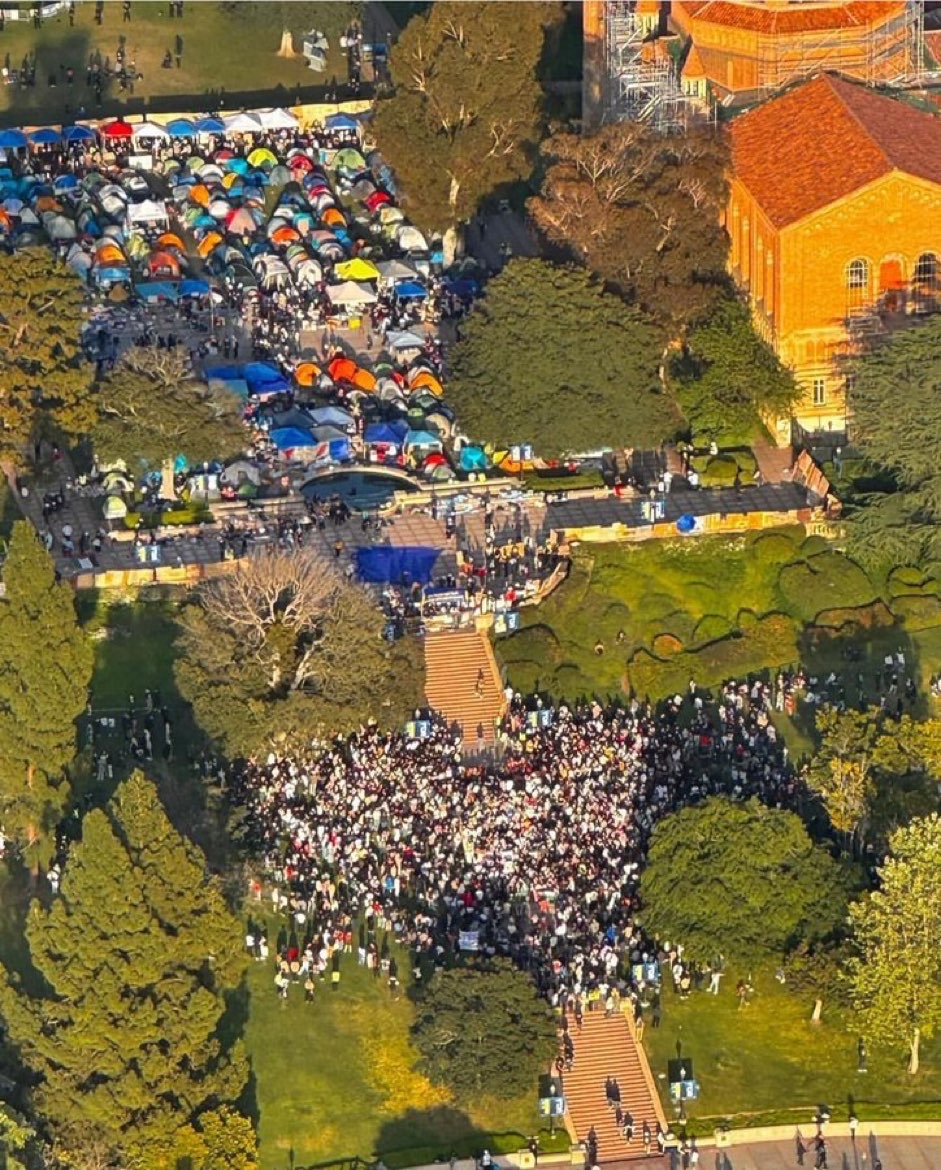
A year has passed since an international student intifada held high the banner for Palestinian liberation. In the midst of a genocide, thousands of people at hundreds of campuses globally issued a clarion call: we will not stand idly by as our institutions and states invest in death and destruction.
But the encampments were about much more than divestment, especially here in the United States. They were an active choice made by citizens of empire to shine light on the lives of a people and place that the mainstream media decided was unworthy of its attention, let alone its honesty.
In a moment when Palestinians in Rafah were bracing for the unimaginable (which came later that spring) and looked to the rest of the world to see who was watching, to see if anyone would answer their calls to keep Israel’s genocidal promises at bay — it was the students who responded and sent up a flare that our cities and states could not ignore.
I wish I could say with a full heart that the student movement for justice in and liberation of Palestine stands unbroken today, as strong as ever. It’s what we’re supposed to say, what we want to hear. But that’s just not the case. The truth is fascist repression, long before Trump came to office, has taken hold in some capacity on every campus, including and especially ours at UCLA – and it is taking a toll on all of us.
But here’s the other truth…
Sumoud does not mean you never break.
It means you breathe through the pain of every fracture and have faith that it and that you – collectively – will heal stronger. Meanwhile, we live, work, and organize together with every strained breath.
Despite an obsession in the media and by university administrations with specific student groups or campuses, the student intifada of spring 2024 was not led by any one organization, coalition, or university. Its unstoppable energy wasn’t the replication of a protest method; it was the result of the fact that its inspiration was the spirit of Palestinians themselves.
The community kitchens, the street medics, the libraries, the prayers, and the People’s University classes were all guided by lessons livestreamed straight from the genocide. Faculty, staff, and workers of conscience in higher education were reminded that one cannot simply teach the future you want into existence; you must actively fight for it, and more importantly, do so in community with your students and colleagues.
It wasn’t romantic or utopian; it was a principled commitment to the necessary and to one another.
To be human and face a genocide (even as witness and not victim) is unlike anything else in the world. It reaches and seeps into every crevice, in ways we often do not immediately recognize. It beats down parts of your soul which you have to then recover, battered and bruised. The bureaucracy of genocide wears you out in legal battles and the minutiae of logistics. The movement for freedom starts to feel like a network of people operating in silos. You forget your own power and instead start looking for others to find it for you, waiting to be reminded that our leaders are found only in the process of operating within the collective. This is how genocide kills those of us it cannot shoot or bomb into oblivion. It dislodges our center.
Don’t look back with nostalgia. Don’t mark this week with a commemoration. Locate and recommit to your center, to Palestine, to your peers, to collective power. The encampments were never the success of the student intifada. You are. Your power and visible solidarity, your refusal to allow the silencing of genocide – is needed now more than ever.
 Poppy Press
Leave a comment